DARPA and Brain Machine Interfaces

From a long New Yorker feature:

“Since its inception, darpa had asked if computers could be more closely coupled with minds. But its interest in embedding electronics directly in the cortex emerged only after the N.I.H. workshops demonstrated that the technology was mature enough. In 2002, the agency created a program, called Brain-Machine Interfaces, which laid a scientific foundation for the development of cognitive implants that could enhance soldiers. “The human is becoming the weakest link in Defense systems,” the agency noted—implying that biology itself needed an upgrade. A darpa official speaking at an agency symposium encouraged attendees to visualize soldiers who could act as human lie detectors, or communicate by computer-aided telepathy.

By 2003, darpa had spent millions of dollars on Brain-Machine Interfaces. But in the post-9/11 political climate—following a controversial darpa surveillance program, along with the conflicts in Afghanistan and Iraq—the agency’s leadership sought to redefine its goals. The head of darpa’s Defense Sciences Office at the time told me, “We had this interest in being able to move things with the brain, and it didn’t look like anyone was going to be too excited about flying airplanes with the technology.” The country was at war, and many soldiers returning from the front with missing arms were using replacements that were little more than hooks—technology that would have been recognizable during the Civil War. darpa reasoned that it should focus its investment in brain-machine technology on making the wounded whole, rather than on building super-warriors. “Frankly, it made it easier,” the official said. “If someone said, ‘Why are you spending all this money?,’ it was kind of a dual-purpose thing. How could you argue we shouldn’t be?” darpa officials arranged for their director to visit Walter Reed Army Medical Center, to meet soldiers who had lost their arms. Moved by the experience, he committed more than a hundred million dollars to a new program, called Revolutionizing Prosthetics.”
To Whom Do We Want To Be Accountable?

Jotting down notes on to whom we want to be accountable as a success metric, before we put anything out in the world…

Elise: Future learners (see previous post)

Kara: Making the future accessible for people who haven’t been curious about it before. How the tries is easily explained so people can understand it.

CJ: Peers — animators and people of color. Representation in front of and behind the camera matters. “It’s important to tell others that we have women of color doing this show and calling the shots.” On animators, a lot of people are interested in bringing animators and journalism together and this is my way of digging into the future, saying, “You can be an animator in news, you can animate for the radio!”

Nick: I don’t think we need to make something FOR the npr.org audience, but I think this is a place to figure out other platforms that this can get on. Apple News, Facebook — how it should work best on FB, and then we’re hoping there’s enough there there to elevating the concept to an OTT service (Netflix, Hulu). Being insider enough, but not so deep in the weeds.

A central ambition: We are trying to be representative of the future, cover the future and speak to and target the future.

Future You, With Me

Finally, we’re getting to a concept unveiling…

Future You with Elise Hu is a new video reporting journey that begins on April 9 on npr.org and other places where you find your videos — YouTube and Facebook. You’ll hear original radio versions of our episodes on Morning Edition.

Who will we be, as humans, in 2050? The question led us down a path to a fast-changing frontier in human evolution: The ways in which our biological brains, or human intelligence, is melding with artificial intelligence.

Science and technology  are allowing us to augment our intelligence and capabilities in ways previous generations only imagined.

The world’s most prominent innovators are racing to decode the brain to unlock more possibilities for augmentation. Mark Zuckerberg announced that he is working to make a brain interface that will let people communicate via their thoughts. Bryan Johnson created Kernel and invested $100 million to make our neural code programmable. Elon Musk  unveiled Neuralink, the company he founded to correct traumatic brain injuries and increase human intelligence.

The humans that exist thirty years from now could look quite different than the humans of today. When does augmentation … become alteration of the essence of humanity? The ethical and social implications abound. Future You takes audiences to the front lines of that change.

Strategic Alignment

We are a team of six producers, myself included. We’re dedicating our time and talent to this because of the potential to extend reach to people who don’t listen to NPR but watch video on YouTube or other platforms, to educators who can help expand NPR content into classrooms, and to young audiences who literally are the future.

The audience I feel most accountable to are the younger learners; I will be tickled if I hear from teachers that they are showing this to their kids as a jumping point to talk about the future. Sure, reaching other eyeballs is good, but I want to be committed to the audience I feel most accountable to so we don’t get distracted or, for that matter, disappointed.

Offering a video robust product like this one, with content that’s evergreen and tickles audience curiosities, allows us to deepen relationships with social platforms that help amplify our work and are hungry for more visual content. It opens up new possibilities for relationships with streaming services like Apple TV, Amazon, Hulu or Netflix. It’s a vehicle to more business reward opportunities through grants and sponsorships. On each of our organization-level strategic goals of reach, reward and relationships, this aligns.

A note about our creative process

Much like the innovators we’re tracking, as storytellers we’re only in phase one. April’s pilot begins a learning journey WITH our audiences on the best ways to follow this story and build engagement along the way. We want to complete the journey by the end of the season, but alongside the NPR community that joins us. So phase one is an opportunity for us to LEARN and CHANGE along the way. That means, we are flexible on our assumptions and ready to iterate as we go along.

How AI Will Rewire Us

An Atlantic cover piece.

“In 1985, some four decades after Isaac Asimov introduced his laws of robotics, he added another to his list: A robot should never do anything that could harm humanity. But he struggled with how to assess such harm. “A human being is a concrete object,” he later wrote. “Injury to a person can be estimated and judged. Humanity is an abstraction.”

Quartz Obsession on Neurostimulation

Total coincidence, this just came out today

I especially like this section, on brain hacking history:


~43 AD: Roman physician Scribonius Largus pens Compositiones Medicamentorum, in which he describes using the bioelectric torpedo fish to treat headache and gout.

11th century: Persian physician Ibn-Sidah suggests using electric catfish to treat epilepsy.

1783: An electrical accident causes physician Jan Ingenhousz to partially lose his memory, but it also makes him strangely happy. In a letter to Benjamin Franklin, with whom he corresponded, Ingenhousz calls for clinical trials into the use of electricity to improve mood.

1890: William James first suggests that the human brain can change over time in The Principles of Psychology. Previously, it was believed that brains were fixed with innate abilities, and that you basically couldn’t teach an old dog new tricks.

1938: Electroshock therapy is introduced by Italian psychiatrists Ugo Cerletti and Lucio Bini.

1948: Polish neuroscientist Jerzy Konorski coins the term “neuroplasticity,” a reference to the malleable nature of the brain.

1964: The first academic article showing cognitive benefits of neurostimulation is published.

1987: French neurosurgeon Alim Louis Benabid uses deep-brain stimulation to calm the tremor in a patient with Parkinson’s.

2000: Eric Kandel wins the Nobel Prize in physiology or medicine for his work showing how nerve cells communicate using electrical and chemical signals, prompting wider interest in neuroplasticity.

2017: The FDA approves the NSS-2 Bridge, the first electric stimulation device approved to treat opioid withdrawal.

Center for Humane Tech/Ethics Guru scheduling

We are trying to schedule Tristan Harris, who is a leading voice on the effects of technology on society and humanity. His comms aide, Lynn, says they may have a tie-in event in April that would allow us to do one-on-one with Tristan but also give us an extra element that could fit into the series. I told them on/before April 23 is what we’re aiming for for Tristan.

Bryan Johnson (Kernel founder) was behind The OS Fund — funding only tech that would rewrite operating systems of life, the world. Tech that might be operable just by thinking about it, essentially changing human interfaces completely. This led to the birth of Kernel and investing in other things in the brain space.

The BrainNet … Potential Applications

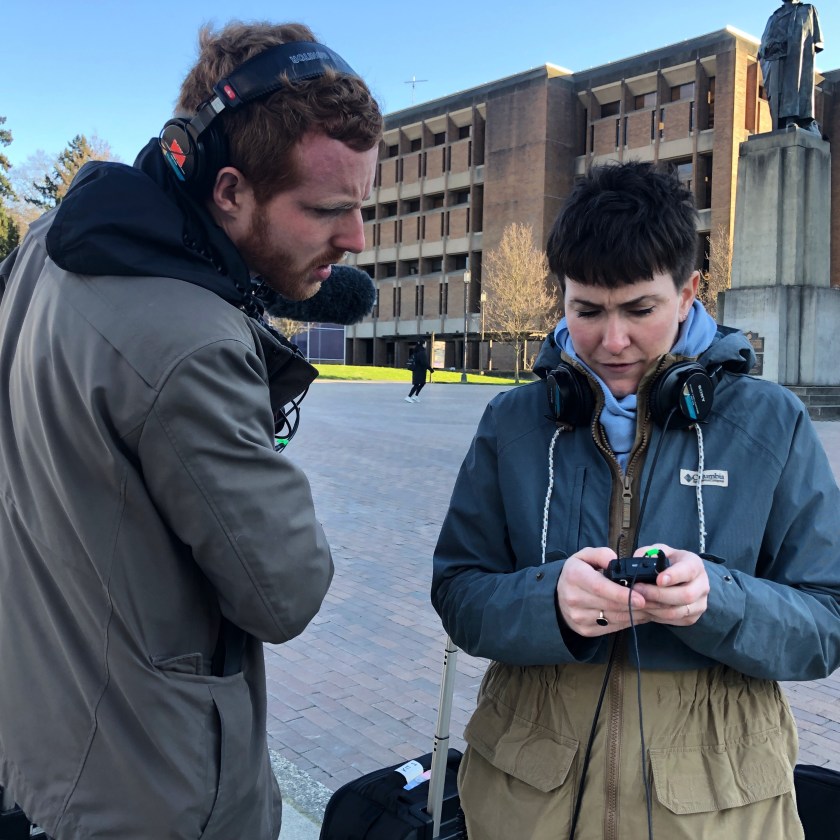
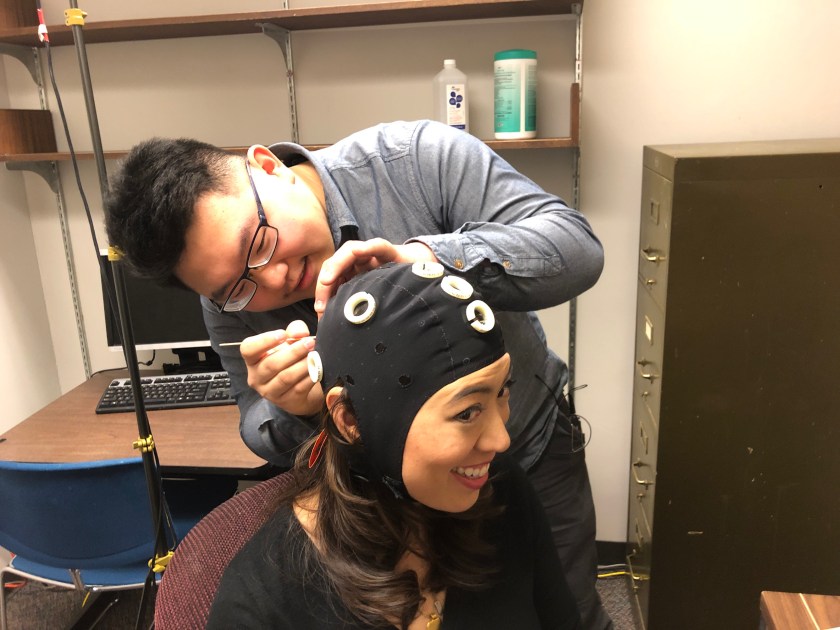
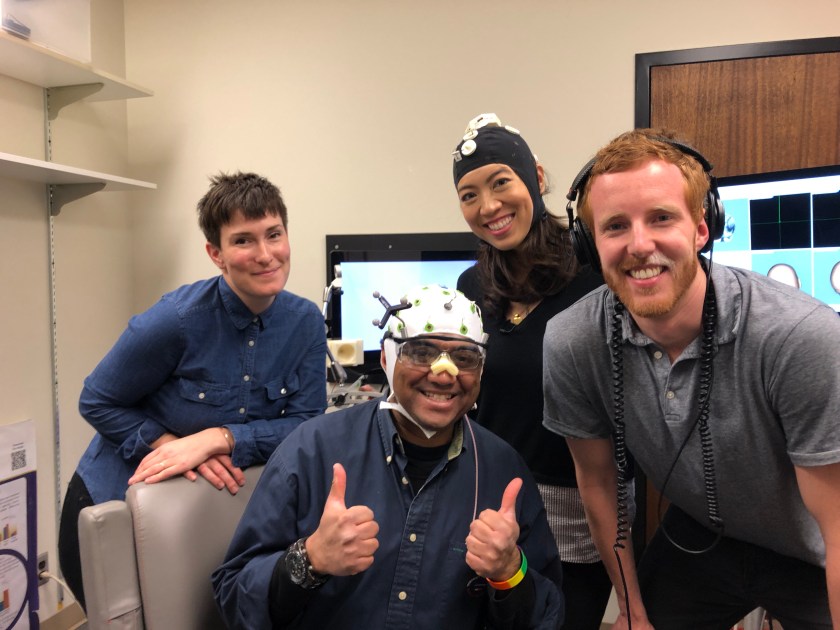
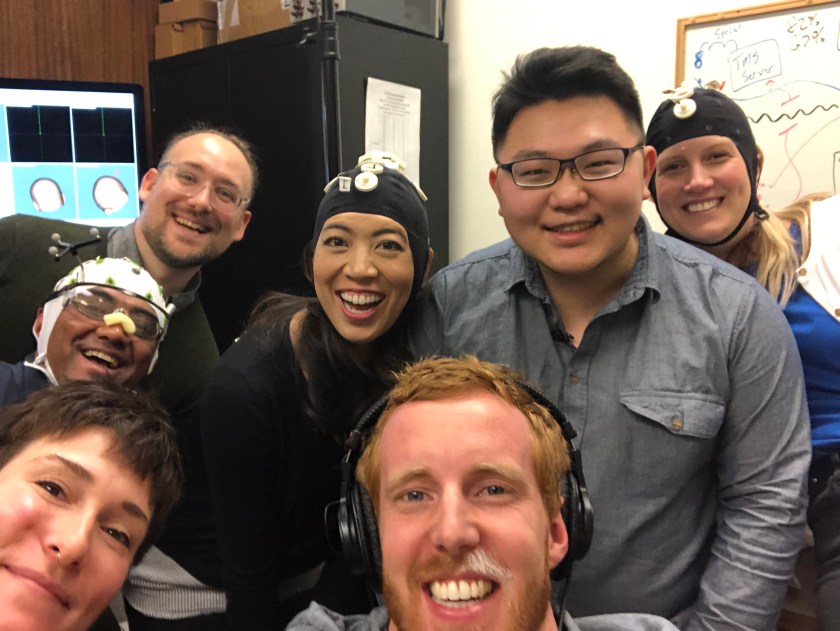
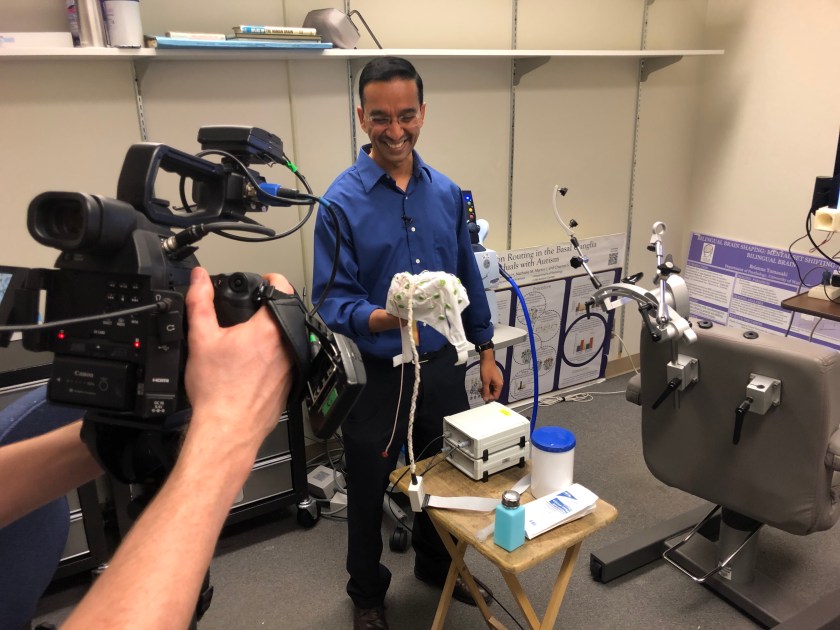
We asked the team at the UW Neurotech center to prep us for our upcoming visit to try their brain network and specifically to describe how it will be potentially used:

“Regarding real-world applications, BrainNet is meant to be a proof-of-concept of multiple human brains collaborating to solve a task that none of the brains individually could. Extrapolating this into the future, one can imagine networks of brains overcoming the evolutionary limitations of single brains by solving difficult scientific and social problems facing humanity that no single brain can solve on its own. Other possible applications include a new mode of communication between humans that can be viewed as computer-assisted telepathy, a way to communicate directly with patients who are locked-in, and potentially, a new way to transfer knowledge or skills directly between brains.”