A reader/viewer named Eric Delegard shared this awesome multi-part write up on why the “brain’s magical future” and all the work going into what humans can BE is so important.
Tag: brain machine interfaces
DARPA and Brain Machine Interfaces
From a long New Yorker feature:
“Since its inception, darpa had asked if computers could be more closely coupled with minds. But its interest in embedding electronics directly in the cortex emerged only after the N.I.H. workshops demonstrated that the technology was mature enough. In 2002, the agency created a program, called Brain-Machine Interfaces, which laid a scientific foundation for the development of cognitive implants that could enhance soldiers. “The human is becoming the weakest link in Defense systems,” the agency noted—implying that biology itself needed an upgrade. A darpa official speaking at an agency symposium encouraged attendees to visualize soldiers who could act as human lie detectors, or communicate by computer-aided telepathy.
By 2003, darpa had spent millions of dollars on Brain-Machine Interfaces. But in the post-9/11 political climate—following a controversial darpa surveillance program, along with the conflicts in Afghanistan and Iraq—the agency’s leadership sought to redefine its goals. The head of darpa’s Defense Sciences Office at the time told me, “We had this interest in being able to move things with the brain, and it didn’t look like anyone was going to be too excited about flying airplanes with the technology.” The country was at war, and many soldiers returning from the front with missing arms were using replacements that were little more than hooks—technology that would have been recognizable during the Civil War. darpa reasoned that it should focus its investment in brain-machine technology on making the wounded whole, rather than on building super-warriors. “Frankly, it made it easier,” the official said. “If someone said, ‘Why are you spending all this money?,’ it was kind of a dual-purpose thing. How could you argue we shouldn’t be?” darpa officials arranged for their director to visit Walter Reed Army Medical Center, to meet soldiers who had lost their arms. Moved by the experience, he committed more than a hundred million dollars to a new program, called Revolutionizing Prosthetics.”
Seattle Shoot Photos
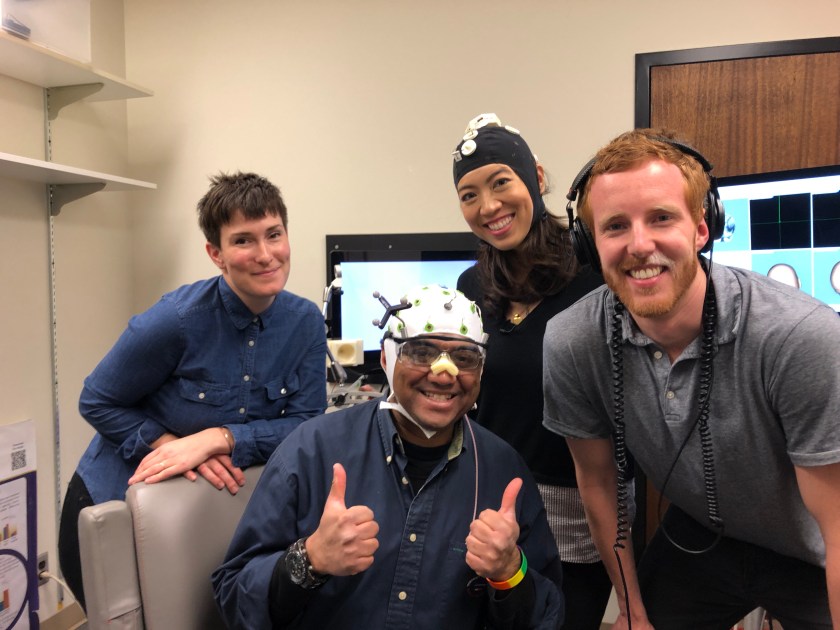
Everything went super smoothly and the team at UW taught us so much. Thanks, UW Neurotech Center!
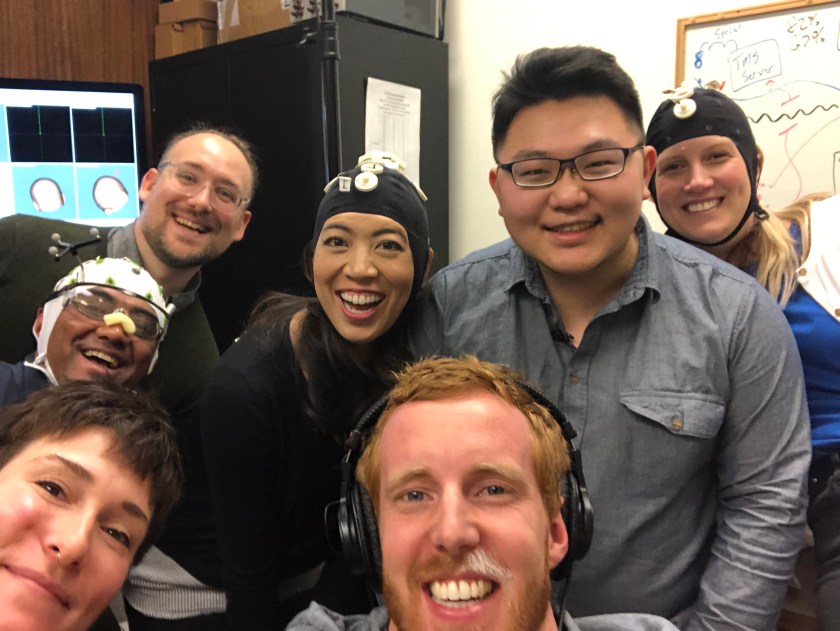
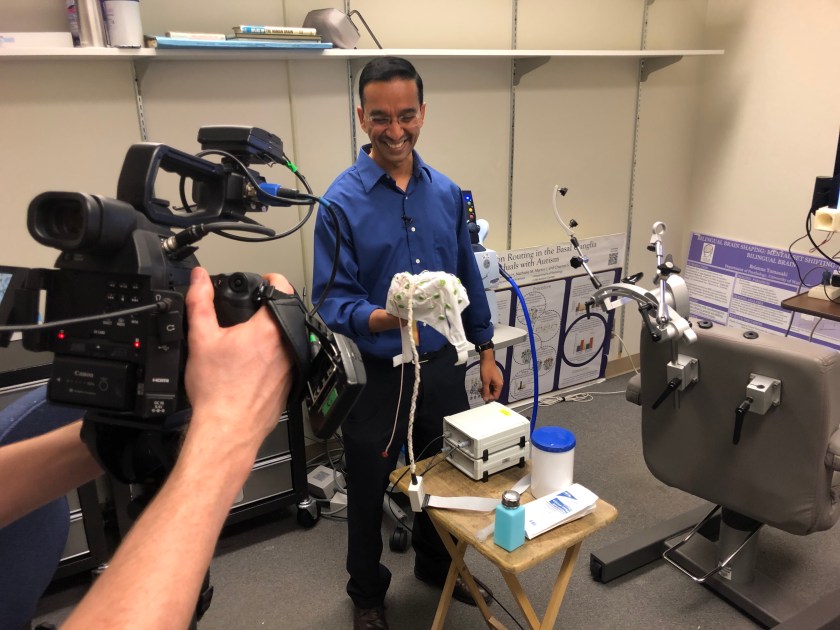
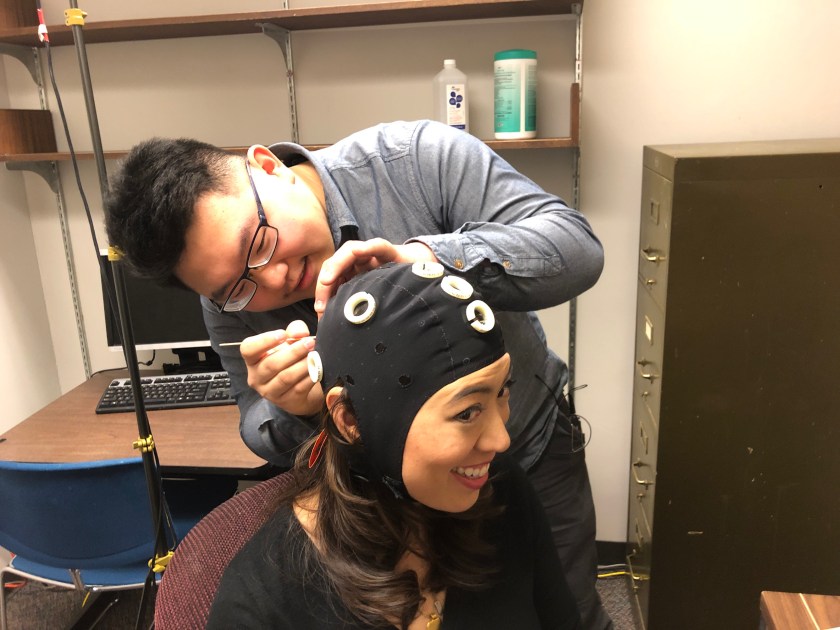
Kernel: Commercializing Hacking of the Human Brain
Kernel is one of the two companies (the other being Elon Musk’s Neuralink) that’s working with researchers on brain-computer interfaces. We had an intro call this morning so I could learn what they’re up to. Loose notes:
Speaking with Alanna & Shayna, the communications team at Kernel. They run all of Brian’s comms and marketing for Kernel and for the VC he runs and for his thought leadership.
Foundational insight — everything the world looks like frlows from the capabilities and limitations of the human brains. how we understand each other, how we understand the world, the awesomeness that is the human brain and the evolutionary limitations that are there.
Kernel is somewhat unique in the space in that we’re not starting from a “how to tackle disease” or “move their bodies again” but starting from a place of “how do we expand cognition” with the understanding that once we understand how to do that then we can understand how to tackle problems. We’re starting from the other side, which is there’s so much potential here. How do we build on potential. Solutions will come from that.
Organizing principle is build on understanding. We have very little understanding of how the brain works right now. How do all elements come together to make us who we are? Think about it like FitBit when we learned that we could measure biometric data like heart health and sleep. We’re not at that place in the brain, and that’s partly because we don’t understand how it all works. Right now the tools for measuring and reading it are rudimentary. Anything we do have is enormous and have to be institutionalized, like fMRI.
FOCUSES
- is it possible to have non-invasive (wearable) for our brains? What are the tools for read out, the neuroscience of readout, with the physics of miniaturization?
- Once you figure out how to read, then it’s can you write? Can you deliver nudges to the brain? Is there a way to know, based on something you’re wearing, when you’re dwelling on something unsuccessfully? Would it be possible to nudge your thinking inside your brain? What are most useful and enhancing modes?
KERNEL offices and labs are in LA, in Venice.
Smaller operation in Boston
Hire researchers … Hired the pre-eminent neurophysicist to come in-house and partners and advisers from mostly from
TIMING
Right now what’s going on is entirely proprietary … off record or would have to hold. Kernel and Neuralink are in a race. Whoever gets the first thing that can go to market. Embargoes are necessary. Hooman the CTO can do the explaining on video. He’s lovely. Really wonderful way of understanding complex things. Center of all kinds of modalities. Can do that in February.
- Documentary is being produced … called I Am Human, a doc about this journey to forge man and machine. Focused on the existing things to market around solving problems. Follows three patients, one with Parkinson’s, one blind and one with paralysis. Then to Brian and what he is doing to enhance himself. Releasing in April in Tribeca. Sending a preview.
- Presently working with the Future of Everything team at WSJ to do a deep dive on a narrower focus on what’s coming to market. What’s the process of coming to market?
Helpful Links on Brain Machine Interfaces
With thanks to the team at the Center for Neurotech at the University of Washington!
- Overview of brain-computer interfaces (BCIs)
- Introductory book/e-Book
- arXiv article for Current Opinion in Neurobiology on combining AI and the brain using neural co-processors.
- Neuroethics research at our center
Prepping for Our Exoskeleton Tryout
Finally, we have lined up the ideal exoskeleton experience to try out and get on video. The researchers at the University of Houston, led by Jose Contreras-Vidal, have one-upped the traditional exoskeleton that assists with aging limbs and joints and created an exo that you control with your brain.
From a business standpoint, exoskeletons are huge for the future of industry, as the workforce ages and more people want to work for longer without pain. From a medical and science standpoint, exoskeletons are helping those born with genetic disorders or who have lost limbs.
Contreras-Vidal has an exoskeleton that’s designed for children… and candidates to be fitted for it are available for us to see them move through the entire process. From Smithsonian Mag:
“A number of researchers over the years have helped paralyzed people move using electrodes implanted in their brains. Contreras-Vidal’s patent-pending system is different because it is noninvasive—users take the electrode cap on and off at will. This is particularly useful in the case of patients who will only need the exoskeleton temporarily, such as stroke victims who might use the exoskeleton to regain walking ability, then learn to walk unaided.”
NOTES from brainstorm call w/Team Video (Mito, Nick) plus editor Uri:
Questions: If our bodies fail and our brains are still working, do we still exist? At what point are we brains in a jar?
Is this a question we could address in 30 years?
What is the far end of this, implication wise?
What are the future iterations of exoskeletons?
What are the implications of BMI’s, generally?
At what point does a “human” end and “machine” begin, i.e. cyborgs?
Exoskeletons protect your body, older people or joints — then build on that from there. Tell it in steps. So people can imagine how this evolves.
1) this is a thing and protect a worker or a 90 year old person. but this is just the beginning.
2) what is possible? the brain will break down, too. maintain mobility while body is deteriorating.
3) Is there a suit or other materials to help. How does the design evolve into something more efficient?
There’s exoskeletons. Then there’s BMI. Which could have many applications for the body. Then there’s the future of the human body, which involves gene therapy, etc. What are other applications of BMI that can cover the field?
The cyborg question: Ground level. An exoskelton supplements movement. Needles in the brain. How many different replacement categories can we think of? Movement, speech, cognition. Rachet it up and somewhere is a line people are uncomfortable crossing.
Where do you see the technology being developed now? Is there more lifelike or muscle type exo work being done?
There’s three tiers: Exoskeletons, BMI, Human Body
Addressing the so what? question, i.e. These are some applications and developments so you can see how this ties together. We are doing a baby step to introduce BMI in the exoskeleton feature, since it is the most obvious place to see signals are getting sent and programed by scientists into artificial limbs. It introduces how this level of exoskeletons really work. Maybe we can touch on Lowe’s exos work…
But then we escalate into far more ethical/philosophical questions by introducing different BMIs over time.
 Future Human