Everything went super smoothly and the team at UW taught us so much. Thanks, UW Neurotech Center!
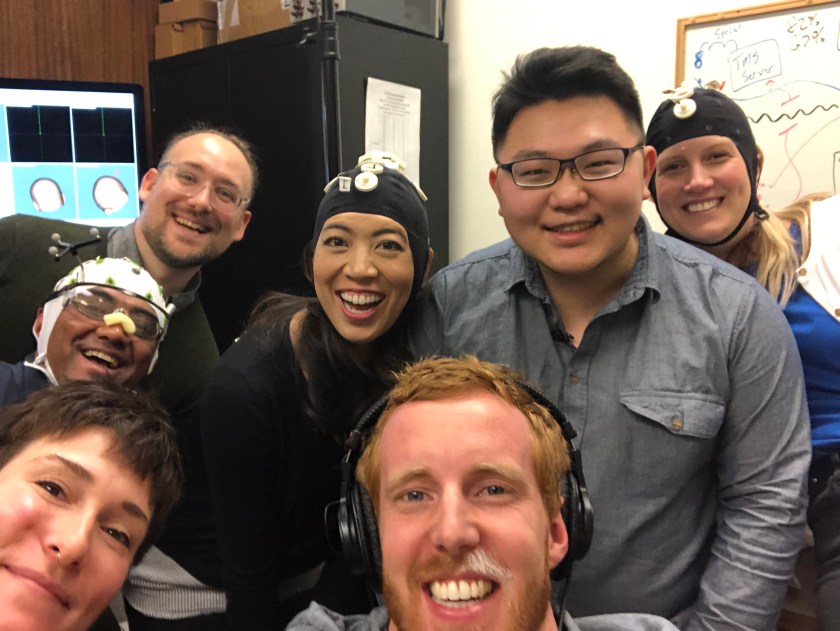
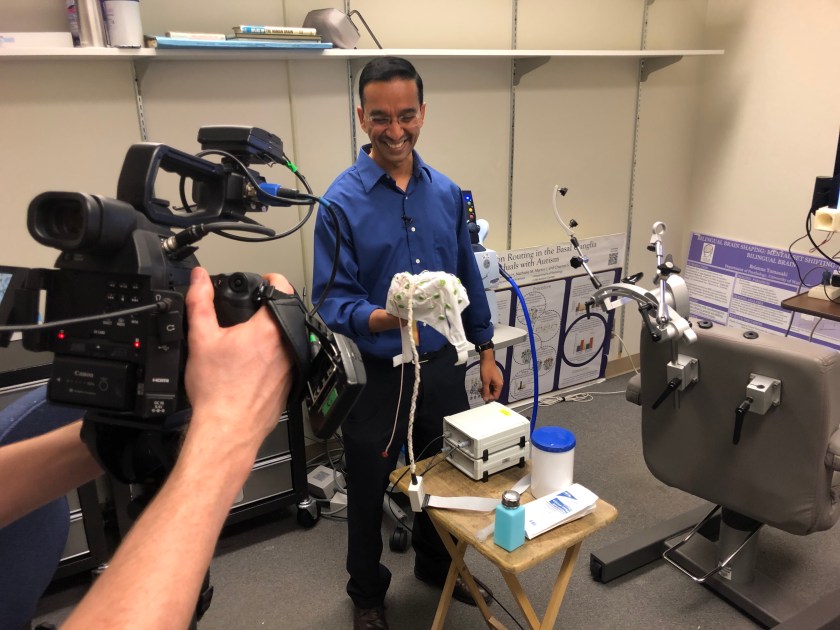
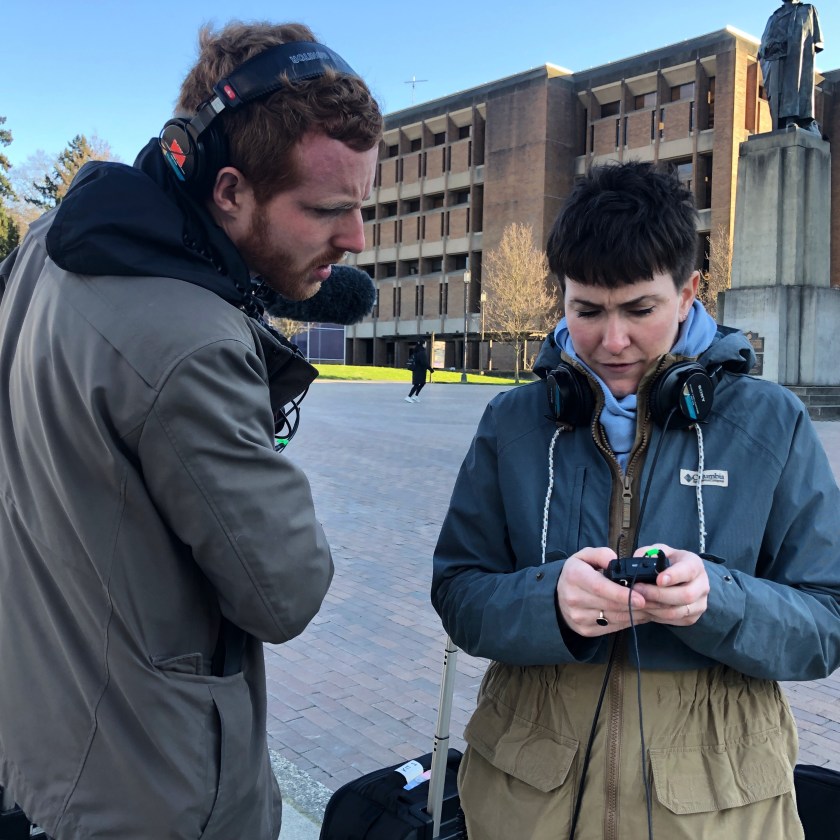
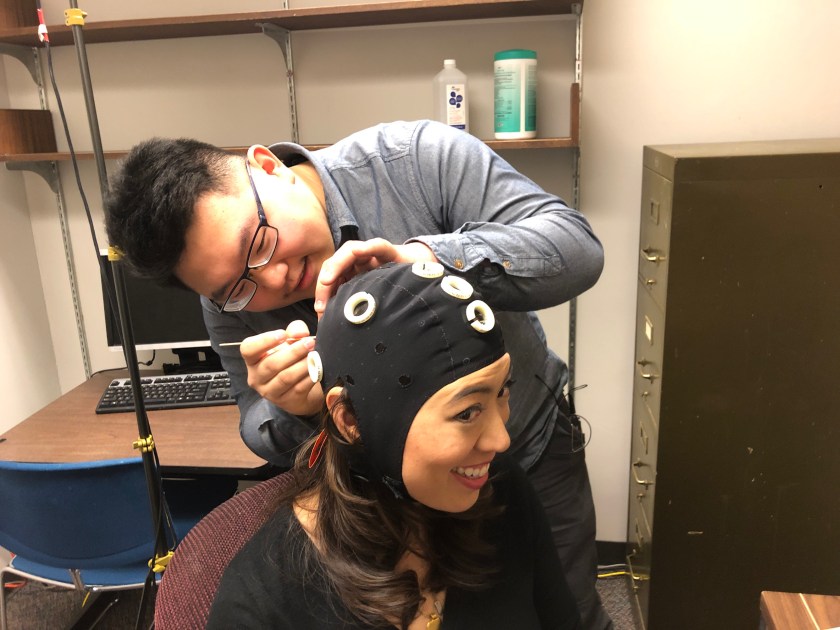
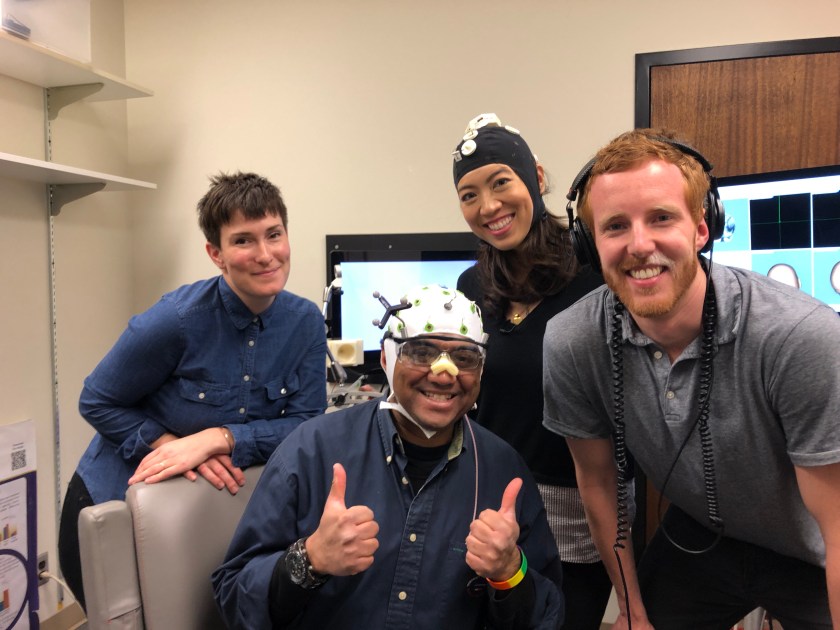
Everything went super smoothly and the team at UW taught us so much. Thanks, UW Neurotech Center!
We asked the team at the UW Neurotech center to prep us for our upcoming visit to try their brain network and specifically to describe how it will be potentially used:
“Regarding real-world applications, BrainNet is meant to be a proof-of-concept of multiple human brains collaborating to solve a task that none of the brains individually could. Extrapolating this into the future, one can imagine networks of brains overcoming the evolutionary limitations of single brains by solving difficult scientific and social problems facing humanity that no single brain can solve on its own. Other possible applications include a new mode of communication between humans that can be viewed as computer-assisted telepathy, a way to communicate directly with patients who are locked-in, and potentially, a new way to transfer knowledge or skills directly between brains.”
We’ve checked out thought-controlled robotic limbs, and are now lining up brain-to-brain communication with thought alone. Where shall we go next? Some ideas of things going on around the US:
Some notes from an not-yet-released film on this topic:
Scientists are now developing technologies that could radically alter the way we are as human beings
Linking biological brains directly to machines
What is unnatural, what is inhuman?
We are transforming into a technological species, we don’t know what the outcome will be
If we start tinkering with the brain, we start changing it … are we about to fundamentally change what it means to be human?
Bill — bicycle accident, now tetraplegic treated at the VA
“I always want to do more … and I can’t do anything for myself. People in my situation, they just never move again. I want to move from this point to that point, without help.”
Paralysis cuts off the communication between brain and the body parts … if we can figure out what exactly is connected to what from the brain…
The attempt to understand what part of the brain does what it does, that’s the idea. It’s the most complex system we’ve ever seen in the universe.
The brain is so unbelievably complicated and yet somehow it is us. “If we could crack the code of the brain, you could solve mental illness, cure people who are sick, restore capabilities that disease has taken away…”
Ann — artist with Parkinsons, so her brain and hands are no longer communicating
Exhausted and disorganized mentally, blocking the way she can be with people the way that she used to
“So far we have no way to slow down the progression or stop the illness”
So much brain related disease around the world, a “massive epidemic” because we have no ways of stopping or preventing these illnesses
Doctors implanted electrodes in her brain … to provide around the clock electric stimulation to the parts of her brain that were atrophying.
Stephen — lost his vision later in life
“everything’s white … it’s like the whole world basically collapsed”
Got prosthetic eyes — could they be MORE advanced? Crank up the magnification? Add infared eyes? They are camera-eyes so why not get eyes as good as a cats? etc.
Technology is taking off in understanding the brain. In the near future we’re going to see ways of fixing problems and ENHANCING humans. Capacity to define a left turn in evolutionary history. Questions about the future, the risks, the potential. So far, this is off the radar.
Bryan Johnson/neurotech entrepreneur
Started Braintree. In 2013, it was acquired by EBay. Then he could use his own money to solve larger problems. Venture Fund invests in hard science. And the company Kernel, which is based in Venice.
“We can overcome our biological limitations”
We can reject the things that stop us from moving forward.
Predicts advanced brain hacks to merge human brains with tech will be on our doorsteps in 15-20 years.
The Wyss Center, Switzerland
John Donoghue, founder
Trying to interpret the code of signals coming out of the brain.
The brain consists of billions of neurons that all speak together. You can hear the crowd of neurons but not the details. You need more accurate information. Need to go inside. Pass the barrier of the scalp and skull and go in contact with the brain. Developing a brain electrode, avoiding dust, biologic and bionic contamination. These powered electrodes get worn, by implanting the electrode into or onto the brain. By implanting the electrodes you can activity of SINGLE neurons. The electrical impulses of the neurons and convert them into a signal scientists can understand, a digital piece of data, but then you can do with it anything you do with data. WHAT DOES THE CODE MEAN can be broken down.
Brain Computer Interfaces give us the ability to understand the brain’s electrical signals to replace lost function. Brain science is showing us how to understand ourselves at the level of the machine. What happens when we fully understand the brain?
“We are linking biological brains DIRECTLY to machines.” The human is fragile but it’s creative and smart and can push beyond. Now we’re bringing them together to use the human and advantages of the machine in a symbiosis.
The upside of restoring brain activity is enormous.
NEUROETHICS
Breakthroughs happening faster than we imagined. As we unlock secrets of the brain, will something change fundamentally about what it means to be human?
YOU is in your brain.
If you start implanting electrodes in it, at what point is it problematic?
To what extent do we want to integrate tech into mainstream society?
Where’s the line between healing and enhancing, when you can tap into the brain?
Should we proactively improve the brain we have?
Kernel — mainstream tools to solve problems and improve what works
Trying to make a brain interface that shows you all your brain activity.
The QUANTIFIED BRAIN
Can we help you push away an unproductive thought? If we have tools to nudge our behavior, can we re-think the things that have always held us back?
Then does it become a matter of choice — what we want to become?
Where are the edges? Could we communicate the emotion you’re feeling to a loved one? Could we teach a new skill more easily?
UW lab:
Speaking without words
brain signals from one to another, you could understand my memories and emotions without me talking about them
increasing empathy? or terrifying
they can read your brain… couldnt they manipulate and control it?
TALK TO TRISTAN HARRIS
DARPA is super involved in brain machine tech, what if it’s used as weapons?
China has a huge brain mapping effort, ditto South Korea, Japan
China is going to be the biggest investor in science in the world by 2020
This then becomes a race for power
Who gets the tech? What do we use it for? Under what conditions do we use it?
The companies who control these tech have societal impacts. Cannot predict the consequences but some are thinking about it.
With thanks to the team at the Center for Neurotech at the University of Washington!
 Future Human